Fiber vs. Mobile Data Internet in Kenya: The Ultimate Guide for Businesses, Hotspots, and Community Hubs
2/22/2026
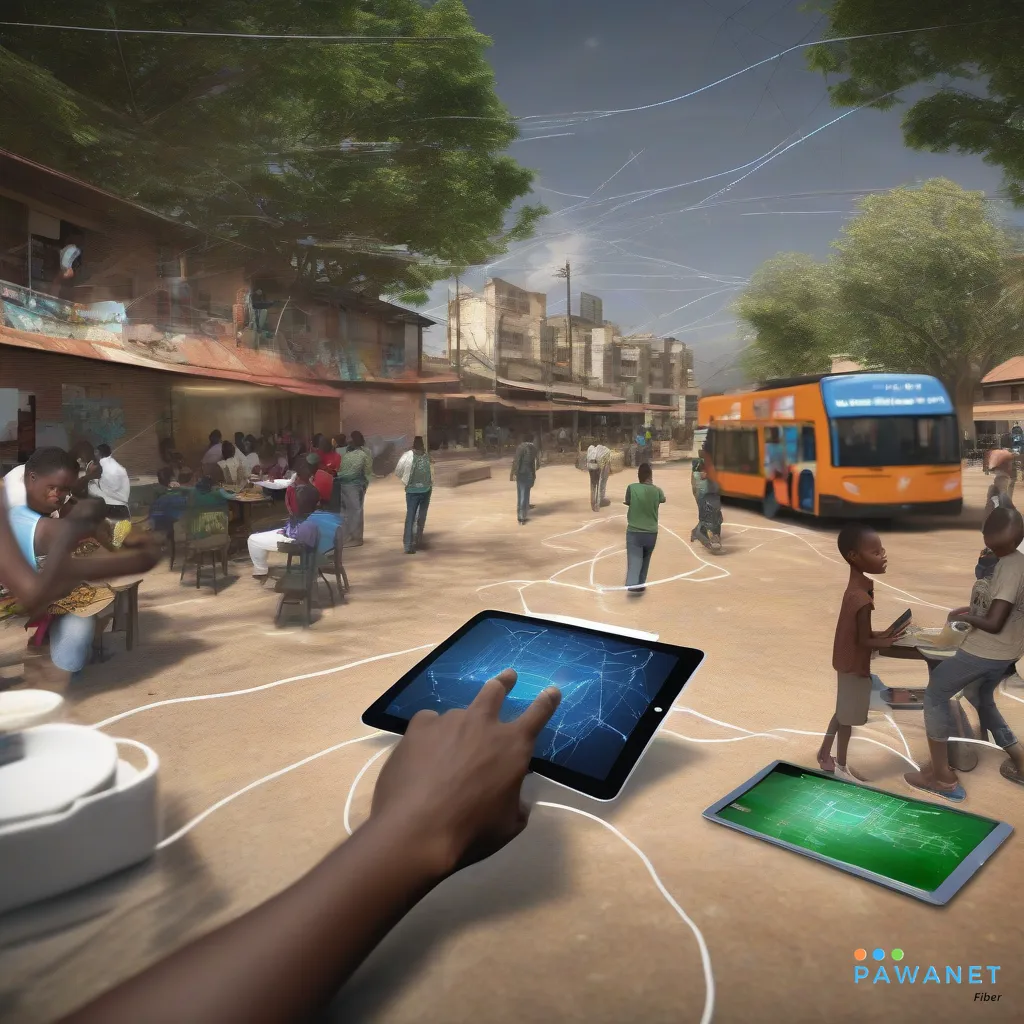
Fiber vs. Mobile Data Internet in Kenya: The Ultimate Guide for Businesses, Hotspots, and Community Hubs
In Kenya's rapidly evolving digital landscape, reliable internet connectivity is no longer a luxury but a fundamental necessity for businesses, public hotspots, and community initiatives. The choice between fiber optic internet and mobile data (4G/5G) often presents a dilemma for Kenyan enterprises and operators aiming to provide seamless connectivity and even monetize their internet services.
As a leading Internet Service Provider (ISP) in Kenya, Pawanet understands the unique connectivity challenges and opportunities across our towns and cities. This guide delves into a comprehensive comparison of fiber internet versus mobile data, helping you determine the optimal solution for your specific needs, whether you're running a bustling cyber café, managing a school's network, or deploying community Wi-Fi hotspots.
Partner with Pawanet & Make money
Turn your premises into a high-growth business. We provide the technology and support; we build the network and you reap the rewards.
Learn More & ApplyUnderstanding the Contenders: Fiber Optic vs. Mobile Data
Before we compare, let's briefly define each technology:
- Fiber Optic Internet: This technology transmits data as pulses of light through thin strands of glass or plastic fiber. It's a wired connection renowned for its incredible speed, stability, and high bandwidth capacity. For businesses and public hotspots, fiber is often the backbone of their digital operations.
- Mobile Data (4G/5G): This refers to internet access delivered wirelessly over cellular networks. 4G (LTE) is widely available, while 5G is the newer, faster generation, expanding its footprint in urban centers. Mobile data offers flexibility and portability, connecting devices anywhere within network coverage.
Key Comparison Factors for Kenyan Businesses and Hotspots
When evaluating fiber versus mobile data for commercial use, several critical factors come into play:
1. Speed and Bandwidth Capacity
- Fiber Optic: Fiber internet offers symmetrical speeds, meaning upload and download speeds are often identical and consistently high. With speeds ranging from tens to hundreds of Mbps, and even Gbps, fiber handles massive data loads effortlessly. This is crucial for businesses with multiple users, cloud operations, large file transfers, and providing a superior experience for public Wi-Fi users.
- Mobile Data: While 4G speeds can be adequate for basic browsing, they are often asymmetrical, with much slower upload speeds. 5G promises fiber-like speeds in ideal conditions, but these speeds can be inconsistent and vary significantly based on network congestion, signal strength, and location. For Wi-Fi hotspots serving numerous simultaneous users, mobile data can quickly become a bottleneck, leading to frustration.
2. Reliability and Stability
- Fiber Optic: Fiber connections are inherently more stable. They are less susceptible to interference from weather, electromagnetic signals, or network congestion. This translates to consistent uptime, which is paramount for businesses like POS systems, VoIP communication, and always-on Wi-Fi hotspot services.
- Mobile Data: Wireless connections are prone to drops, slower speeds during peak hours, and signal fluctuations. Environmental factors, such as buildings or even heavy rain, can degrade performance. For mission-critical business operations or high-demand public access, relying solely on mobile data can introduce unacceptable risks and downtime.
3. Latency (Response Time)
- Fiber Optic: Fiber boasts extremely low latency, meaning data travels from one point to another with minimal delay. This is vital for real-time applications such as online payment processing, cloud-based software, video conferencing, and, importantly, a responsive user experience for hotspot customers.
- Mobile Data: Mobile data typically has higher latency than fiber. While improving with 5G, it can still lead to noticeable delays for latency-sensitive applications, impacting the fluidity of operations and customer satisfaction in busy environments.
4. Cost: Initial Investment vs. Long-Term Value
- Fiber Optic: The initial installation cost for fiber can be higher than setting up a mobile data connection. However, when considering long-term operational costs, bandwidth for the price, and the ability to serve many users, fiber often proves more cost-effective. Providers like Pawanet offer competitive Pawanet Fiber Pricing Kenya: Your Guide to Cost-Effective Connectivity for Businesses, Hotspots & Communities specifically designed for businesses and communities.
- Mobile Data: Mobile data plans often appear cheaper initially, particularly for individual or low-usage scenarios. However, for commercial use with high data consumption, costs can quickly escalate due to data caps, usage-based billing, and the need for multiple SIM cards or expensive routers to achieve sufficient bandwidth, making it less economical in the long run.
5. Scalability
- Fiber Optic: Fiber networks are highly scalable. As your business or hotspot grows and requires more bandwidth, upgrading a fiber connection is often a straightforward process without needing extensive infrastructure changes. This future-proofs your investment.
- Mobile Data: Scaling mobile data typically means upgrading to more expensive plans or adding more devices, which can be less efficient and more costly than a single, high-capacity fiber connection.
6. Security
- Fiber Optic: Fiber offers enhanced security against data tapping compared to copper cables or wireless signals, making it a more secure option for sensitive business data.
- Mobile Data: Wireless signals are inherently more susceptible to interception, though modern encryption protocols offer significant protection. For businesses handling confidential information, fiber provides an additional layer of physical security.
7. Installation & Mobility
- Fiber Optic: Fiber requires a physical installation, which can take time, especially for new deployments. Once installed, it's a fixed connection. However, for permanent business locations, cyber cafés, or community hubs, this fixed nature is an advantage for reliability. You can learn more about Unlocking Growth: Fiber Internet Installation Services in Kenya for Businesses, Hotspots & Community Hubs.
- Mobile Data: Mobile data is quick to set up and offers unparalleled mobility. This is perfect for temporary events, mobile kiosks, or construction sites where a fixed connection isn't feasible.
Fiber Optic Internet: The Backbone for Kenyan Businesses and Hotspots
For the majority of Kenyan businesses, public Wi-Fi hotspots, cyber cafés, schools, and community centers, fiber optic internet emerges as the superior choice. Its high speed, unwavering reliability, low latency, and cost-effectiveness in the long run make it ideal for:
- Cafés & Restaurants: Providing fast, free, or monetized Wi-Fi that keeps customers happy and connected.
- Cyber Cafés & Gaming Hubs: Delivering the speeds necessary for lag-free online gaming and quick downloads.
- Retail Shops: Powering POS systems, inventory management, and offering customer Wi-Fi.
- Educational Institutions: Supporting e-learning platforms, administrative tasks, and student connectivity.
- Community Hotspots: Enabling affordable, reliable internet access for local residents.
- Any Business Offering Wi-Fi Monetization: A robust fiber connection is the foundation for successful Effective WiFi Hotspot Monetization Strategies for Kenyan Businesses & Operators, ensuring a premium service that users are willing to pay for, whether through M-Pesa or other mechanisms.
When considering which internet solution powers profitable commercial Wi-Fi in Kenya, fiber consistently outperforms mobile data. For a deeper dive, read Pawanet's Ultimate Guide: Fiber vs Mobile Data Internet for Kenyan Businesses & WiFi Monetization.
Own a High-Speed WiFi Hotspot Business
Monetize high-traffic areas like cafes, transport hubs, or shopping centers. We provide the billing platform and support to help you succeed.
Start Your HotspotMobile Data: The Flexible Companion
While fiber is the preferred primary internet source for most businesses, mobile data still plays a vital role. It's an excellent solution for:
- Backup Connectivity: Providing redundancy in case of a primary fiber outage.
- Temporary Setups: Events, pop-up shops, or mobile service providers.
- Remote Locations: Areas where fiber infrastructure is not yet available.
- Mobile Teams: Employees needing internet access on the go.
Which is Right for Your Kenyan Enterprise or Hotspot?
The choice between fiber and mobile data in Kenya boils down to your specific operational needs, traffic demands, and long-term vision.
- If you require consistent high speeds, guaranteed uptime, low latency, and the ability to support numerous concurrent users or intensive applications (like public Wi-Fi monetization, cloud services, VoIP), fiber optic internet is your definitive answer. It provides the robust, reliable foundation necessary for sustained business growth and a superior customer experience.
- If your needs are primarily for mobility, temporary setups, or light, occasional use in areas without fiber access, mobile data can be a suitable, flexible option. However, for commercial environments, it's often best utilized as a secondary or supplementary connection.
At Pawanet, we specialize in delivering custom internet network solutions tailored for Kenyan businesses, hotspot operators, and community hubs. Our expertise ensures you get the right connectivity solution that drives productivity, profitability, and seamless user experiences.
Powering Kenya's Digital Future with Pawanet
Making the right internet choice is a strategic decision that impacts your business's efficiency, customer satisfaction, and growth trajectory. While mobile data offers flexibility, fiber optic internet provides the unwavering performance and reliability that Kenyan businesses and hotspot operators need to thrive in today's digital economy.
Contact Pawanet today to discuss your connectivity requirements. Let our experts help you assess your needs and implement a fiber internet solution that is fast, reliable, and perfectly suited for your business, hotspot, or community initiative.